A U.S. buyer guide built around size, engines, off-road capability, towing, family use, fuel economy, and the 626-hp Defender OCTA
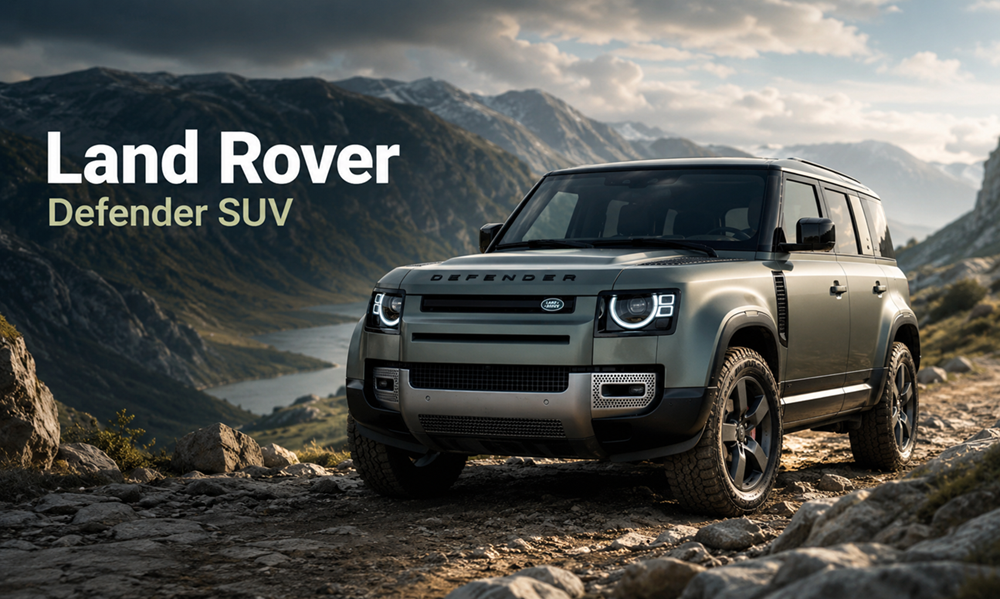
The modern Land Rover Defender SUV is unusual because it does not fit neatly into a single luxury-SUV category. A two-door Defender 90 can function like a premium trail toy. A Defender 110 can serve as a daily family SUV with serious off-road ability. A Defender 130 can carry up to eight people, while the Defender OCTA turns the same basic idea into a 626-horsepower performance off-roader.
That wide range is the Defender’s biggest strength and one of its biggest shopping complications. A buyer who starts by comparing trims can easily get lost in engine codes, wheel packages, suspension options, and appearance upgrades. The easier way to shop is to answer four questions in order: how much space do you need, how much power do you want, how serious is your off-road use, and how much luxury are you willing to pay for?
| The simplest Defender recommendation
For most U.S. buyers, the Defender 110 is the sweet spot. It keeps the useful four-door body, offers available extra seating, preserves the Defender’s serious trail hardware, and avoids the parking and cargo compromises of the 90 or the extra length of the 130. Choose the 90 for personality, the 130 for people and gear, and OCTA only if performance is part of the reason you want a Defender. |
Key Takeaways
- The 2026 Land Rover Defender is sold in 90, 110, and 130 body styles, plus the high-performance Defender OCTA based on the 110.
- Car and Driver lists 2026 U.S. pricing from about $65,450 to $160,250, depending on configuration.
- The engine range spans a 296-hp turbocharged four-cylinder, a 395-hp turbocharged and electrically assisted inline-six, a 518-hp supercharged V8, and a 626-hp twin-turbo V8 in the OCTA.
- All-wheel drive and a two-speed transfer case are central to the Defender’s capability, with advanced terrain systems available depending on trim.
- Land Rover rates Defender towing capacity at up to 8,200 pounds, but the exact rating varies by model and engine.
- The Defender can offer up to about 11.5 inches of ground clearance and can wade through roughly 35 inches of water in the appropriate configuration.
- The 2026 refresh brings a larger 13.1-inch Pivi Pro touchscreen, subtle lighting and trim changes, and new driver and off-road assistance features.
- Fuel economy is not a Defender strength. Most gasoline versions sit in the high teens to low 20s on EPA highway ratings, while V8 models consume significantly more fuel.
- Land Rover’s U.S. warranty covers the vehicle and powertrain for four years or 50,000 miles, with no complimentary scheduled maintenance.
Question 1: Which Defender Body Style Fits Your Life?
Body style matters more than trim because it changes the Defender’s daily usefulness. The 90, 110, and 130 share the same visual identity, but they behave like three different vehicles when you load passengers, luggage, pets, or outdoor gear.
| Model | Doors | Seats | Best For | Main Tradeoff |
| Defender 90 | 2 | Up to 5 | Style, tight trails, couples, weekend use | Rear access and cargo space |
| Defender 110 | 4 | 5 to 7 | Best all-around family and adventure use | Third row is optional and compact |
| Defender 130 | 4 | Up to 8 | Large families, passengers, long trips | Length and parking footprint |
| Defender OCTA | 4 | 5 | Maximum performance and off-road speed | Very high price and fuel use |
When does the Defender 90 make the most sense?
The 90 is the most characterful version because its short wheelbase and two-door body keep the proportions closest to the classic Defender idea. It is easier to place on narrow trails, easier to park in the city, and visually distinctive in a market dominated by four-door SUVs.
The cost of that personality is practicality. Rear-seat access requires more effort, and cargo room behind the second row is limited. Car and Driver fit four carry-on bags behind the rear seat in a Defender 90 during its luggage testing. That is enough for a weekend, but it is not a natural family road-trip configuration.
Why is the Defender 110 the best all-around choice?
The 110 is the Defender most buyers imagine when they picture the current SUV. It has four doors, a useful rear seat, a manageable overall length, and the broadest combination of luxury, powertrain, and capability options.
It can be configured with seating for five or with a small third row for occasional extra passengers. More importantly, it does not feel oversized on ordinary roads. For a buyer who wants one vehicle for school runs, commuting, ski trips, camping, towing, and real trail use, the 110 is the easiest version to justify.
Who actually needs the Defender 130?
The 130 exists for buyers who love the Defender but need more interior length. Standard three-row versions can seat up to eight, making it the closest thing in the lineup to a traditional full-size family SUV.
The extra length also improves cargo flexibility, although luggage space becomes tight when every seat is occupied. Buyers who want maximum cargo rather than maximum seating can look for the 130 Outbound, which gives up the third row to create a large five-passenger load area.
Question 2: Which Defender Engine Is Worth Paying For?
Defender engines are less about necessity than personality. Even the entry engine can handle daily driving, but the inline-six and V8 versions make the heavy SUV feel much more relaxed.
| Engine | Output | Character | Best Use | Watch For |
| 2.0L turbo I4 | 296 hp | Adequate, lighter-duty | Value-focused daily use | Works harder with a full load |
| 3.0L turbo I6 mild hybrid | 395 hp | Smooth, strong, refined | Best overall engine | Higher purchase price |
| 5.0L supercharged V8 | 518 hp | Fast, loud, emotional | Enthusiast luxury SUV | Fuel cost and price |
| 4.4L twin-turbo V8 OCTA | 626 hp | Extreme performance | High-speed road and off-road use | Six-figure premium |
Is the 296-hp four-cylinder enough?
For local driving and lighter use, yes. The turbocharged four-cylinder provides 296 horsepower and keeps the entry price lower. The limitation becomes more obvious when the Defender is loaded with passengers, luggage, roof gear, or a trailer. The engine has to work harder and does not deliver the effortless feel many buyers expect from a luxury SUV at this price.
Why is the 395-hp inline-six the smart engine?
The 3.0-liter inline-six uses turbocharging, an electric supercharger, and a 48-volt mild-hybrid system. With 395 horsepower, it gives the Defender the relaxed midrange performance that suits its weight without pushing operating costs into V8 territory.
For most buyers, this is the engine to target. It has enough power for highway merging, mountain roads, towing, and fully loaded family travel, yet still keeps the Defender feeling like an adventure SUV rather than a performance toy.
Who should buy a V8 Defender?
The 518-hp supercharged V8 is for buyers who want the Defender to feel special every time it starts. Performance is dramatic, and Car and Driver recorded 0 to 60 mph in 4.4 seconds in a V8-powered Defender 90.
The tradeoff is obvious at the gas pump. Car and Driver lists EPA ratings around 15 mpg city and 19 highway for the V8 Defender 90 and 14 city and 18 highway for the V8 Defender 110. If you cover a lot of miles, the inline-six is easier to live with.
Question 3: Do You Need a Defender OCTA?
The Defender OCTA is not simply a trim package. It is a heavily reworked high-performance version of the 110 designed to operate at speeds and loads that would expose the limits of the regular suspension.
Its 4.4-liter twin-turbo V8 produces 626 horsepower. Land Rover pairs that engine with 6D Dynamics, a hydraulically linked suspension system that controls pitch and roll without traditional anti-roll bars. The system is designed to allow more wheel movement off-road while still controlling the body on pavement.
Land Rover lists the OCTA from $158,800 on its current U.S. Defender site, while the darker OCTA Black starts at $169,200 on current build pages. For context, Car and Driver’s 2026 Defender pricing runs up to roughly $160,250 before the latest special versions and individual options.
| OCTA makes sense only if you want the experience
A regular six-cylinder Defender already has more off-road ability than most owners will use. OCTA earns its price through speed, suspension technology, exclusivity, and V8 character, not because ordinary trails require 626 horsepower. |
Question 4: How Serious Is the Defender Off Road?
The modern Defender uses unibody construction and independent suspension rather than the separate frame and solid axles associated with older Defenders. That change dramatically improves road comfort without turning the vehicle into a soft crossover.
In the right configuration, the Defender can provide about 11.5 inches of ground clearance and wade through roughly 35 inches of water. All-wheel drive, a low-range transfer case, hill descent control, terrain programs, and available electronic differential hardware give it genuine trail ability.
The 2026 update also introduces Adaptive Off-Road Cruise Control on selected versions. Instead of holding a highway speed, the system manages low-speed progress across rough terrain while the driver focuses on steering.
Land Rover’s official Defender towing and capability guide lists up to 8,200 pounds of towing capacity for Defender 90, 110, and 130 models, while noting that the exact rating varies by engine and configuration.
Can You Tow 8,200 Pounds With Any Defender?
No. The 8,200-pound figure is a maximum, not a universal rating. The actual tow limit depends on the body style, engine, installed towing equipment, vehicle load, wheel and tire specification, and the trailer’s tongue weight.
For a travel trailer or boat, the number on the individual vehicle’s certification and trailering information matters more than the marketing maximum. Passengers, luggage, roof accessories, and hitch weight also reduce how much payload remains available.
- Use the factory towing package rather than relying on an aftermarket hitch alone.
- Check the exact trailer weight when loaded for a trip, not only its empty advertised weight.
- Keep tongue weight and vehicle payload within the individual vehicle’s limits.
- If towing frequently near the maximum, the six-cylinder or V8 configurations are more natural choices than the entry engine.
What Changed on the 2026 Defender?
The 2026 Defender receives its first meaningful visual and cabin refresh since the current generation arrived in the United States. Land Rover’s U.S. newsroom confirms redesigned headlight and taillight signatures, a gloss-black grille bar, patterned hood trim, updated side vents, revised bumper inserts, and new wheel-center details.
The most noticeable cabin change is the standard 13.1-inch Pivi Pro touchscreen. Land Rover also revised the center-console area and shifter position. New technology includes a driver-facing attention-monitoring camera, while selected versions add Adaptive Off-Road Cruise Control. The Defender 130 can also be equipped with an integrated air compressor, useful for lowering and restoring tire pressures on trails.
For the current U.S. lineup and official model information, visit Land Rover USA’s Defender page.
How Much Fuel Does a Defender Use?
Fuel economy is one of the clearest reasons not to buy more engine than you need. The Defender’s tall shape, all-wheel-drive hardware, off-road tires, and substantial weight all work against efficiency.
| Configuration | EPA City | EPA Highway |
| Defender 90, 4-cylinder | 18 mpg | 21 mpg |
| Defender 90, 6-cylinder | 18 mpg | 23 mpg |
| Defender 110, 6-cylinder | 18 mpg | 22 mpg |
| Defender 130, 6-cylinder | 17 mpg | 21 mpg |
| Defender 90, V8 | 15 mpg | 19 mpg |
| Defender 110, V8 | 14 mpg | 18 mpg |
Car and Driver’s highway testing also shows why EPA ratings should be treated as a baseline rather than a guarantee. Its six-cylinder Defender 110X returned 18 mpg on a 75-mph highway test, while a Defender 130 Outbound returned 19 mpg.
Check the exact model-year configuration on FuelEconomy.gov before estimating annual fuel cost, because wheels, engines, and body styles can change the rating.
Is the Defender Comfortable Enough for Everyday Luxury-SUV Use?
Yes, and that is the reason the current Defender has a much broader audience than the old one. The independent suspension, available air suspension, supportive seats, excellent outward visibility, and quiet cabin make it comfortable enough for commuting and long trips.
The interior also avoids the fragile feeling of some luxury SUVs. Exposed structural elements, washable-looking surfaces, grab handles, and durable trim give the cabin a practical character even when leather, premium audio, panoramic glass, and heated or cooled seats are added.
The 2026 13.1-inch screen runs Land Rover’s Pivi Pro system and supports Apple CarPlay and Android Auto. Higher trims can add a digital instrument cluster, head-up display, Meridian audio, upgraded leather, and extensive driver-assistance technology.
What Are the Biggest Defender Compromises?
- Price climbs quickly. A well-equipped six-cylinder 110 can move far beyond the entry MSRP, and OCTA pricing sits firmly in exotic-luxury-SUV territory.
- Fuel economy is mediocre even before choosing a V8.
- The 90 is stylish but inconvenient for rear passengers and luggage.
- The optional third row in the 110 is best for occasional use, not full-time adult seating.
- The 130 is spacious but long enough to feel cumbersome in parking garages and dense cities.
- Large wheels may look premium but can reduce tire sidewall, increase replacement cost, and be less desirable for serious off-road use.
- There is no complimentary scheduled maintenance, and luxury-brand service and replacement parts can be expensive.
Which Defender Should You Buy in 2026?
| If This Sounds Like You | Best Defender Direction |
| You want the iconic shape and rarely carry rear passengers | Defender 90 |
| You need one SUV for family life, road trips, and trails | Defender 110 with the 395-hp inline-six |
| You regularly need three rows for more than occasional use | Defender 130 |
| You carry adventure gear but do not need a third row | Defender 130 Outbound |
| You want a Defender mainly because it is fast and special | Defender V8 or OCTA |
| You plan serious trail use | Choose smaller wheels, suitable all-terrain tires, and the off-road hardware before cosmetic packages |
How Does the Defender Compare With Its Main Rivals?
The Defender’s strongest competitors come from different directions. The Lexus GX emphasizes traditional luxury, durability, and body-on-frame construction. The Jeep Wrangler is more basic on road but offers deep trail credibility and removable-body fun. The Mercedes-Benz G-Class is more prestigious and more expensive. The Ineos Grenadier is more utilitarian and deliberately old-school.
The Defender’s advantage is balance. It is much easier to live with every day than the most trail-focused alternatives, yet it can go farther off pavement than the typical BMW X5, Mercedes GLE, Porsche Cayenne, or Genesis GV80.
Its weakness is that this balance is expensive. Buyers who never use the low-range transfer case, wading capability, roof-load options, or trail systems may get more comfort, efficiency, or interior space from a conventional luxury SUV for similar money.
Frequently Asked Questions
Is the Land Rover Defender a luxury SUV?
Yes. The current Defender combines luxury-SUV materials, technology, driver assistance, and road comfort with genuine low-range four-wheel-drive hardware. Entry versions are more utilitarian, while upper trims can be specified with premium leather, advanced audio, air suspension, panoramic glass, and extensive comfort equipment.
Which Land Rover Defender is best for a family?
The Defender 110 is the best fit for most families because it has four doors, a useful second row, manageable dimensions, and optional extra seating. Families that regularly need seating for seven or eight should consider the longer Defender 130.
How many people can the Defender seat?
Depending on body style and configuration, the Defender can seat from five to eight people. The 90 seats up to five, the 110 can be configured for additional seating, and the 130 can seat up to eight.
Can the Land Rover Defender tow 8,200 pounds?
Some Defender configurations are rated to tow up to 8,200 pounds when properly equipped. The exact rating varies by engine, model, equipment, and vehicle load, so buyers should verify the individual vehicle’s trailering documentation.
Is the Defender good off road?
Yes. The Defender combines all-wheel drive, low range, substantial ground clearance, deep-water wading capability, terrain modes, hill descent control, and available differential technology. Tires and wheel size still matter, so a road-focused 22-inch-wheel configuration is not automatically the best choice for difficult trails.
What is the most powerful Defender?
The Defender OCTA is the most powerful current production Defender, using a 4.4-liter twin-turbo V8 rated at 626 horsepower. Land Rover claims 0 to 60 mph in about 3.8 seconds, while Car and Driver recorded 3.7 seconds in testing.
Does the 2026 Defender have Apple CarPlay?
Yes. The updated 13.1-inch Pivi Pro infotainment system supports Apple CarPlay and Android Auto.
What warranty comes with a new Defender?
Land Rover provides a four-year/50,000-mile limited warranty and a four-year/50,000-mile powertrain warranty. Complimentary scheduled maintenance is not included.
Final Verdict: The Defender 110 Is the Center of the Lineup for a Reason
The Land Rover Defender SUV succeeds because it gives buyers something most luxury SUVs cannot: authentic off-road engineering without forcing them to tolerate an uncomfortable or crude daily driver. The 2026 refresh improves the technology and presentation without changing the basic formula.
For most buyers, the Defender 110 with the 395-hp inline-six is the configuration to start with. It has enough space for family use, enough power for towing and long trips, enough capability for serious trails, and dimensions that remain reasonable for everyday driving.
The other versions make sense when your priorities are more specific. The 90 is the emotional choice. The 130 is the space choice. The V8 is the sound-and-speed choice. OCTA is the no-compromise performance choice. The smartest Defender purchase is therefore not the most expensive one. It is the body style and engine that let you use the capability you are actually paying for.
Research note: This article was updated for the U.S. market using information available in August 2026. Specifications and model-year updates were checked against Land Rover USA, Land Rover’s U.S. newsroom, and the supplied Car and Driver reference. Pricing, engine availability, towing ratings, fuel-economy figures, options, and inventory can vary by body style and individual vehicle. Verify the window sticker and VIN before purchase.