Tag: Full-Size SUV

  • 2026 GMC Yukon and Yukon XL: Which Size, Engine, and Trim Should You Buy?

    2026 GMC Yukon and Yukon XL: Which Size, Engine, and Trim Should You Buy?

    A U.S. buyer guide to pricing, cargo space, V-8 and diesel engines, towing, trims, and family usability

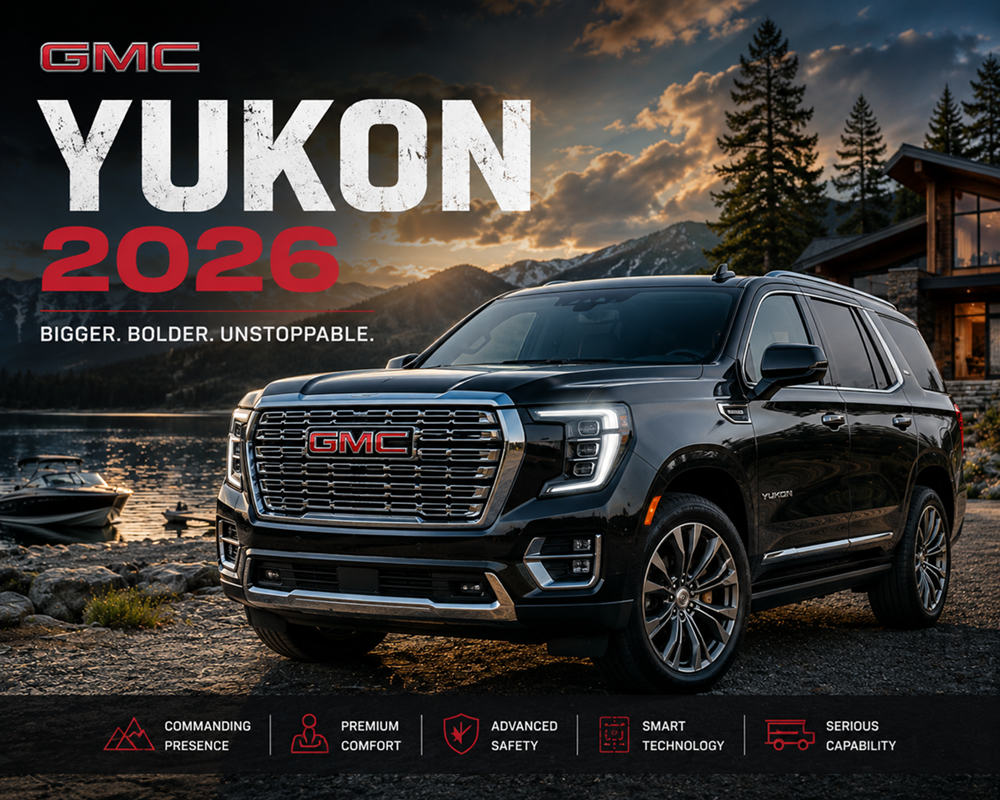
    The GMC Yukon 2026 is a full-size, three-row SUV built for buyers who need truck-based towing capacity, adult-friendly passenger space, and room for family cargo. It is available in standard Yukon and extended Yukon XL body styles, with five trims and a choice of two V-8 engines or a torque-rich turbo-diesel inline-six.

    The 2026 model largely carries over after the substantial 2025 refresh, which introduced a 16.8-inch vertical infotainment screen, updated styling, revised cabin technology, and expanded luxury features. The challenge is not deciding whether the Yukon is capable. It is deciding how much size, power, off-road equipment, and luxury your household will actually use.

    Key Takeaways

    GMC lists the 2026 Yukon from $69,600 before destination and the Yukon XL from $72,600 before destination.

    The standard Yukon is easier to park, while the Yukon XL adds 16 cubic feet behind the third row and a larger 28-gallon fuel tank.

    The 5.3-liter V-8 offers the highest maximum tow rating, the 6.2-liter V-8 provides the quickest acceleration, and the 3.0-liter diesel delivers the best fuel economy and low-rpm torque.

    Elevation is the practical value trim, AT4 is the off-road choice, Denali is the luxury sweet spot, and the Ultimate trims add flagship equipment at six-figure prices.

    A properly equipped rear-wheel-drive Yukon can tow up to 8,400 pounds, but ratings vary by engine, drivetrain, body style, and equipment.

    The Yukon can seat seven or eight passengers, and the Yukon XL is the better choice when the third row will stay occupied during road trips.

    What Is New for the 2026 GMC Yukon?

    The Yukon received its meaningful update for 2025, so the 2026 model is primarily a carryover. That is not a disadvantage for buyers. The current design already includes GMC’s large portrait-oriented touchscreen, an 11-inch digital driver display, a column-mounted shifter, updated exterior lighting, and newer driver-assistance options.

    Because the mechanical package is familiar, shoppers can compare a new 2026 vehicle with discounted 2025 inventory without giving up a major redesign. The correct decision depends on incentives, financing, color, equipment, warranty start date, and the final out-the-door price.

    How Much Does the 2026 Yukon Cost?

    GMC publishes starting prices before its $2,795 destination charge. Car and Driver’s destination-inclusive range begins at $72,395 and reaches $106,695 for the standard-length lineup. The Yukon XL generally adds about $3,000 before options.

    Yukon Trim Base MSRP Before Destination Approx. Price With Destination Best Match
    Elevation $69,600 $72,395 Families wanting the core capability and technology
    AT4 $76,600 $79,395 Buyers needing 4WD hardware and trail-focused design
    Denali $80,400 $83,195 Luxury buyers wanting the 6.2-liter V-8 and Magnetic Ride Control
    AT4 Ultimate $97,900 $100,695 Off-road styling combined with flagship comfort
    Denali Ultimate $103,900 $106,695 Maximum luxury, technology, and standard air suspension

    Current body-style prices, trim features, and inventory tools are available on the official GMC Yukon page. A configured vehicle can cost far more after four-wheel drive, paint, 22-inch or 24-inch wheels, rear entertainment, Super Cruise, trailering equipment, and premium packages.

    Should You Buy the Yukon or Yukon XL?

    The standard Yukon is already a large vehicle at 210.1 inches long. The Yukon XL stretches to 225.2 inches, adding more than 15 inches to the body. That extra length is most noticeable behind the third row, where the XL provides enough room for family luggage without folding passenger seats.

    Measurement Yukon Yukon XL Why It Matters
    Overall length 210.1 inches 225.2 inches The regular Yukon is easier in garages and parking lots
    Cargo behind third row 25.5 cu. ft. 41.5 cu. ft. XL carries far more luggage with all seats occupied
    Cargo behind second row 72.5 cu. ft. 93.6 cu. ft. XL better handles strollers, pets, and sports gear
    Maximum cargo volume 122.8 cu. ft. 144.5 cu. ft. XL is closer to a van for large-item hauling
    Fuel tank About 24 gallons About 28 gallons XL can travel farther between stops with the same engine
    Passenger capacity Up to 8 Up to 8 Seat count depends on bench or captain’s chairs

    Choose the standard Yukon when parking ease and maneuverability matter more than maximum cargo room. Choose the Yukon XL when the third row will be used on vacations, when the family carries bulky equipment, or when a larger fuel tank reduces stops during long-distance towing.

    Which Yukon Engine Is Best for Your Driving?

    Every engine uses a 10-speed automatic transmission. The right choice depends on whether the priority is purchase price, acceleration, towing feel, or long-distance efficiency.

    Engine Output Main Strength Main Tradeoff
    5.3L V-8 355 hp, 383 lb-ft Lowest entry cost and up to 8,400 pounds of towing Slower and less efficient than the diesel
    6.2L V-8 420 hp, 460 lb-ft Strongest acceleration and premium V-8 character Highest fuel use and premium-trim pricing
    3.0L Duramax diesel I-6 305 hp, 495 lb-ft Best highway economy and strongest low-rpm torque Diesel fuel, emissions hardware, and slower acceleration

    The 5.3-liter V-8 is adequate for normal family use and is the towing champion on paper when paired with rear-wheel drive and the correct package. It is the sensible engine for buyers who want a traditional V-8 without paying for Denali-level performance.

    The 6.2-liter V-8 is the emotional choice. Car and Driver recorded a 5.9-second run to 60 mph in a Denali, which is quick for a vehicle of this size. Its effortless passing power is appealing, but the least efficient 4WD configuration is rated at only 14 mpg city and 18 mpg highway.

    The diesel is the long-distance specialist. Its 495 lb-ft of torque arrives low in the rev range, reducing the need for repeated downshifts on grades. Car and Driver achieved 27 mpg in a 75-mph highway test, compared with 20 mpg in the 6.2-liter Denali.

    How Much Can the 2026 Yukon Tow?

    Maximum towing capacity reaches 8,400 pounds for a rear-wheel-drive Yukon with the 5.3-liter V-8 and the correct trailering equipment. Versions using the 6.2-liter V-8 or diesel can tow up to about 8,200 pounds. Four-wheel drive generally reduces those maximums by 200 pounds.

    A maximum rating is not the same as a safe real-world load for every vehicle. Passengers, cargo, accessories, tongue weight, and the exact door-jamb payload label reduce the available capacity. Buyers should verify the VIN-specific trailering guide before purchasing a boat or camper.

    Available camera views, trailer profiles, hitch guidance, transparent trailer view, and jackknife alerts make the Yukon easier to use with a trailer. These tools assist the driver, but they do not replace correct loading, brake equipment, mirrors, or towing experience.

    Which Yukon Trim Fits Your Priorities?

    Trim Why Buy It Why You Might Skip It
    Elevation Large screen, heated seating, available diesel and Super Cruise at the lowest price Still expensive and less luxurious than Denali
    AT4 Two-speed transfer case, skid plate, recovery hooks, all-terrain tires, Magnetic Ride Control Off-road tires and styling may be unnecessary for highway families
    Denali 6.2L V-8, head-up display, premium design, strong ride comfort Packages can push the price close to Denali Ultimate
    AT4 Ultimate Luxury cabin, massage seats, air suspension, Super Cruise, off-road appearance Six-figure price and specialized equipment
    Denali Ultimate Flagship materials, air suspension, Super Cruise, massaging seats, premium audio Overlaps with true luxury SUVs in price

    Elevation is the best value when body size and capability matter more than luxury badging. AT4 is the correct choice for rough roads, snow, campsites, and drivers who will use the two-speed transfer case. Denali is the strongest balance of luxury and cost, while the Ultimate trims are best treated as luxury purchases rather than value decisions.

    How Practical Is the Interior?

    Both body styles offer an adult-friendly third row, which separates the Yukon from many smaller three-row crossovers. A second-row bench provides seating for eight, while captain’s chairs reduce capacity to seven and make third-row access easier.

    The 16.8-inch touchscreen is standard across the range and uses Google built-in services. An 11-inch driver display, multiple camera views, wireless phone charging, available rear entertainment, and available Super Cruise give the cabin the technology expected at this price.

    Denali and Ultimate trims add more dramatic materials, larger audio systems, head-up display technology, massaging seats, and available executive second-row seating. Buyers should sit in all three rows because premium trim does not change the basic seating geometry.

    Is the Yukon Worth More Than a Chevrolet Tahoe or Suburban?

    The Yukon shares its core platform, engines, transmission, suspension design, and body sizes with the Chevrolet Tahoe and Suburban. The GMC premium buys different styling, trim materials, technology packaging, and access to Denali and Denali Ultimate equipment.

    A Tahoe or Suburban is often the better financial choice when capability is the priority. The Yukon is more convincing when the buyer values GMC design, a quieter luxury presentation, or a specific Denali feature. Drive comparable versions back to back and compare out-the-door prices, not brand hierarchy.

    What Should You Check Before Buying a Yukon?

    1. Measure the garage and test both body lengths in the parking conditions you use most often.
    2. Compare the 5.3-liter V-8, 6.2-liter V-8, and diesel on the same highway route.
    3. Verify the exact tow rating and payload label for the VIN and configuration.
    4. Test third-row access with your child seats, passengers, stroller, luggage, or pet equipment.
    5. Request a written buyer’s order listing destination, dealer fees, accessories, packages, and financing conditions.
    6. Price insurance, 22-inch or 24-inch replacement tires, fuel, and expected maintenance before choosing an Ultimate trim.
    7. Use the official recall database to verify that the specific vehicle has no open safety campaign.

    The NHTSA VIN recall lookup provides vehicle-specific recall status. New recalls can be added after an article is published, so checking the VIN is more reliable than relying on a general model-year statement.

    Frequently Asked Questions

    How much is a 2026 GMC Yukon?

    GMC lists the standard Yukon from $69,600 before destination. Adding the $2,795 destination charge brings the base Elevation to approximately $72,395.

    How much more is the Yukon XL?

    The Yukon XL begins around $3,000 above the equivalent standard-length model before options.

    What is the best Yukon engine?

    The 5.3-liter V-8 offers the lowest cost and highest maximum tow rating, the 6.2-liter V-8 is quickest, and the diesel is best for highway efficiency and low-rpm torque.

    How many people can the Yukon seat?

    It can seat up to eight with a second-row bench or seven with captain’s chairs.

    How much can the Yukon tow?

    A properly equipped rear-wheel-drive model can tow up to 8,400 pounds. Exact ratings vary by engine, drivetrain, body, and equipment.

    Which trim is the best value?

    Elevation is the practical value choice. Denali is the better luxury value when the buyer wants the 6.2-liter V-8 and premium chassis technology.

    Is the diesel Yukon worth buying?

    It is most compelling for high-mileage drivers, long highway trips, and towing. Low-mileage owners should compare the option price and local diesel cost with the 5.3-liter V-8.

    The Bottom Line

    The 2026 GMC Yukon combines adult-friendly seating, strong towing, and broad trim choice, but option prices climb quickly. For most households, the standard-length Elevation or Denali with the 5.3-liter V-8 or diesel is the best balance. Choose the Yukon XL for full-time third-row luggage space, and reserve the 6.2-liter V-8 and Ultimate trims for buyers who will use their performance and luxury.