Tag: Garage Organization

  • Best Garage Cabinets for 2026: Storage Picks for Every Garage Zone

    Best Garage Cabinets for 2026: Storage Picks for Every Garage Zone

    A practical U.S. buying guide to wall cabinets, resin cabinets, rolling units, tall steel lockers, and complete garage systems

    The best garage cabinets are not simply the strongest or most expensive units. The right cabinet must fit the wall or floor space you actually have, support the weight of the items you plan to store, resist the moisture and temperature swings in your garage, and remain convenient enough that tools are returned after every project.

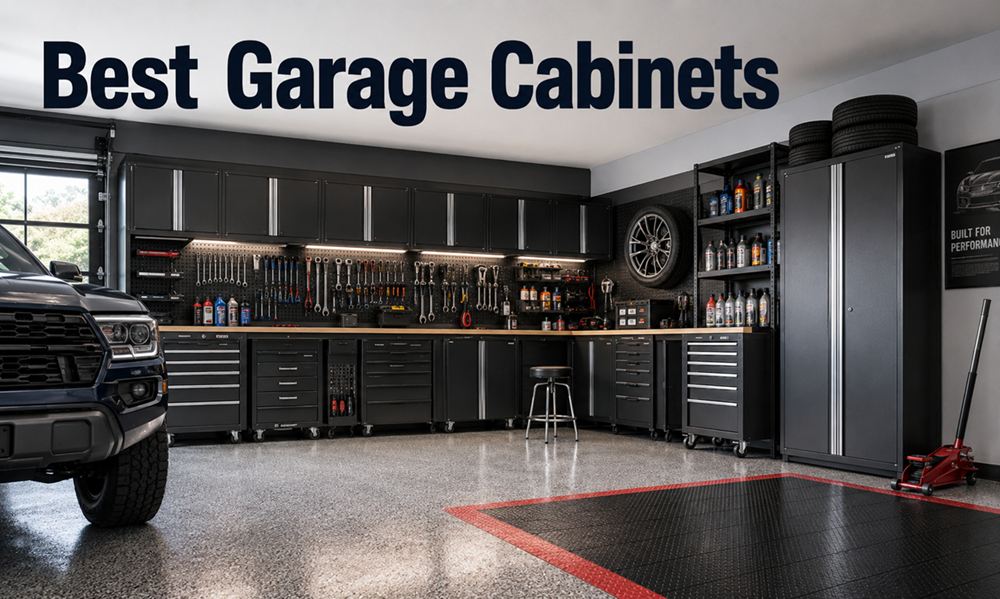
    For most garages, a mixed system works better than filling one wall with identical cabinets. Wall-mounted boxes are useful above a workbench, rolling cabinets keep frequently used supplies near the vehicle, tall lockers hold bulky equipment, and resin cabinets protect household or garden products in damp spaces. This guide uses hands-on findings from the reference test and current manufacturer specifications to match cabinet types with real storage needs.

    Key Takeaways

    Gladiator Full-Door Wall GearBox is a strong wall-mounted choice for light and medium supplies when floor space is limited.

    Suncast Commercial Heavy-Duty Resin Cabinet is a practical floor cabinet for damp garages because resin does not rust.

    Manhattan Comfort Fortress is a useful budget rolling cabinet for supplies that need to move between work zones.

    Kobalt and Husky tall steel cabinets are strong choices for heavy tools, automotive fluids, lawn equipment, and bulky gear.

    Rubbermaid resin cabinets suit humid or coastal garages, while a complete Gladiator Flex system is better for buyers building a coordinated storage wall.

    Measure the garage, total the real load, check shelf ratings, and plan anchoring before ordering any cabinet.

    Which Garage Cabinets Are Best for Different Storage Needs?

    Category Recommended Cabinet Why It Stands Out Best Use
    Best wall-mounted Gladiator Full-Door Wall GearBox Steel body, adjustable shelf, compact 28-inch footprint Car-care bottles, hand tools, detailing supplies
    Best budget wall cabinet Vingli Garage Wall Cabinet Locking steel doors and multiple size choices Light tools and supplies in a small garage
    Best resin floor cabinet Suncast Commercial Heavy-Duty Resin Cabinet 400-lb total rating and rust-resistant multiwall resin Garden products, wash supplies, damp garages
    Best mobile value Manhattan Comfort Fortress Rolling Cabinet Affordable steel storage with casters and adjustable shelving Frequently moved project supplies
    Best premium rolling cabinet Kobalt Rolling Garage Cabinet Wood worktop, lockable storage, and stronger shelf rating Mobile work surface and power-tool storage
    Best tall steel cabinet Kobalt 36-inch Freestanding Cabinet Four shelves rated at 150 lb each and lockable doors Heavy tools, bins, automotive equipment
    Best tall value Husky 36-inch Freestanding Cabinet 622-lb total capacity and broad Home Depot availability General-purpose garage storage
    Best rust-resistant tall cabinet Rubbermaid Double-Door Cabinet Plastic body and high total load rating Humid garages and nonmetal storage needs
    Best complete system Gladiator Flex Cabinet System Preassembled welded steel, soft-close doors, locking storage A coordinated full-wall garage makeover

    Product prices and inventory change frequently. Compare current dimensions and load ratings before ordering, particularly when a retailer offers several cabinets with nearly identical names.

    How Should You Divide a Garage Into Storage Zones?

    A cabinet purchase becomes easier when the garage is divided by activity rather than by empty wall space. Most households need four zones: a workbench zone, a vehicle-care zone, a household and garden zone, and a bulky-equipment zone.

    Garage Zone Ideal Cabinet Type Typical Contents
    Workbench zone Wall cabinet plus rolling base cabinet Hand tools, fasteners, chargers, sanding supplies, safety gear
    Vehicle-care zone Lockable steel floor or tall cabinet Oil, filters, detailing products, jacks, small parts
    Garden and household zone Resin floor or tall cabinet Fertilizer, watering tools, cleaning supplies, paper products
    Bulky-equipment zone Tall freestanding cabinet Leaf blowers, shop vacs, golf clubs, camping gear, large bins
    Flexible project zone Rolling cabinet Paint tools, electrical supplies, portable power tools

    Keep the heaviest items low, store frequently used products between knee and shoulder height, and reserve upper wall cabinets for lighter supplies. Cabinets should not interfere with vehicle doors, garage-door tracks, electrical panels, water heaters, or required appliance clearances.

    What Is the Best Wall-Mounted Garage Cabinet?

    The Gladiator Full-Door Wall GearBox is the best all-around wall cabinet for buyers who want a finished look without committing to a complete custom system. The reference test found that its steel construction held up well through regular use, while the adjustable shelf and magnetic doors made it simple to organize smaller items.

    Its tested dimensions are approximately 28 inches wide, 28 inches high, and 12 inches deep. The shelf is rated for 40 pounds, with a total cabinet rating of 150 pounds. That is suitable for detailing bottles, small power tools, chargers, hand tools, and hardware bins, but not for engine blocks, floor jacks, or heavy fluid cases.

    Wall cabinets save valuable floor area, but their safe capacity depends on installation. Fasteners must enter framing or a properly engineered mounting system. Drywall anchors alone are not an appropriate foundation for a cabinet loaded with tools.

    Which Garage Cabinet Is Best for Damp or Humid Spaces?

    A resin cabinet is usually the safer choice when the garage regularly experiences condensation, road-salt moisture, coastal air, or water from washing vehicles. Suncast Commercial Heavy-Duty Resin Cabinet stands out as a compact floor cabinet with multiwall panels, reinforced construction, adjustable shelving, and a listed 400-pound total capacity.

    Resin does not rust, and small dents are less noticeable than they are on thin painted steel. The tradeoff is that resin doors and hinges can feel less precise, and plastic cabinets should be kept away from intense heat sources. They are also less secure than a heavy welded steel cabinet when valuable tools are stored inside.

    Rubbermaid is the better choice when a tall rust-resistant cabinet is required. The tall double-door model in the reference has an 18-inch depth, 36-inch width, 72-inch height, and a listed 690-pound total capacity. It works well for household supplies, garden products, sports gear, and large lightweight items.

    Which Rolling Garage Cabinet Offers the Best Value?

    The Manhattan Comfort Fortress Rolling Cabinet is a useful entry-level choice for homeowners who need mobile enclosed storage rather than a mechanic-style drawer chest. Its steel body, adjustable shelves, and stainless-steel casters make it easy to move paint supplies, detailing products, or project materials between work areas.

    The reference test found assembly manageable despite the large number of fasteners, although the side panels felt thinner than premium alternatives. Its listed total capacity is 165 pounds, so it is better for distributed medium-weight storage than for stacking dense automotive parts on one shelf.

    Kobalt is the stronger upgrade when the cabinet will also serve as a work surface. Its rolling garage cabinet combines a wood top, lockable storage, adjustable shelving, and a total rating around 200 pounds. Check caster quality and wheel-lock engagement before loading a mobile cabinet, since movement and uneven floors can make a poorly balanced unit unstable.

    What Is the Best Tall Steel Garage Cabinet?

    The Kobalt 36-inch freestanding steel cabinet offers one of the most useful combinations of size, capacity, and internal organization. It measures about 36 inches wide, 72 inches high, and 18.5 inches deep. Four shelves are included, with three adjustable shelves rated at up to 150 pounds each.

    The current Kobalt freestanding cabinet listing also identifies lockable doors, a powder-coated steel finish, adjustable feet, and pegboard surfaces for additional organization. These features make it useful for dense tools, automotive supplies, and equipment that would overload a lightweight wall cabinet.

    The Husky 36-inch cabinet is a close alternative, particularly for buyers who prefer Home Depot pickup and an existing Husky garage system. The reference lists a 622-pound total capacity and 150-pound shelf capacity. Both tall cabinets should be anchored to a wall, especially in homes with children, sloped floors, or earthquake risk.

    When Is a Complete Garage Cabinet System Worth the Cost?

    A full cabinet system makes sense when the goal is not merely to hide clutter but to create a permanent garage workspace. Coordinated systems can combine tall lockers, base cabinets, drawers, wall cabinets, worktops, cable openings, locks, and matching finishes.

    The Gladiator Flex Cabinet System uses preassembled welded 24-gauge steel, adjustable shelving, soft-close doors, auto-return drawers, cable-management openings, and multi-point locks. Gladiator also backs the line with a limited lifetime warranty. One Flex system configuration is listed at 78 inches wide, 75 inches high, and 19 inches deep with a 2,350-pound total system capacity.

    The advantage is consistency and easier expansion. The disadvantage is cost and commitment. A cabinet wall can limit future vehicle parking, EV charger placement, workshop changes, or appliance access. Mark every door swing and drawer extension on the floor before finalizing the layout.

    Which Cabinet Material Is Best for a Garage?

    Material Main Advantages Main Limitations Best Environment
    Steel High load ratings, lockable, professional appearance Can dent, scratch, rust, and become heavy Dry garage with tools and automotive supplies
    Welded steel Stronger structure and less assembly Higher price and difficult delivery Permanent workshop or premium storage wall
    Resin or plastic Rust-resistant, easy to clean, lightweight Less rigid and lower security Humid, coastal, or wash-down areas
    Wood composite Affordable and furniture-like Moisture damage and lower impact resistance Climate-controlled garage or hobby room
    Aluminum Lightweight and corrosion-resistant Expensive and easier to dent Premium systems or damp climates

    How Much Weight Capacity Do You Really Need?

    Cabinet capacity is often misunderstood. A total rating does not mean every shelf can carry the same amount, and a worktop rating may be separate from the cabinet rating. A tall cabinet advertised for 600 pounds may divide that load among four shelves and the cabinet floor.

    • List the heaviest individual items before shopping, including fluid cases, toolboxes, batteries, and power tools.
    • Add the load planned for each shelf rather than relying only on the total cabinet capacity.
    • Keep dense items on the lowest shelf to reduce tip risk.
    • Allow unused capacity instead of loading shelves to the maximum rating.
    • For wall cabinets, treat the mounting system and wall structure as part of the load rating.

    What Should You Measure Before Ordering Garage Cabinets?

    1. Measure wall width, ceiling height, baseboard depth, and floor slope.
    2. Mark the open position of vehicle doors, tailgates, and garage doors.
    3. Locate studs, electrical outlets, switches, panels, plumbing, and charger equipment.
    4. Measure the largest items that must fit inside, not just the available wall.
    5. Confirm delivery-door width and the route from the curb to the garage.
    6. Check whether assembly requires two people or whether the cabinet arrives welded and assembled.
    7. Plan wall anchors before the cabinet is loaded.

    What Safety Features Matter Most?

    Locks are useful for expensive tools, chemicals, sharp objects, and products that should be kept away from children. A lock does not make a light cabinet theft-proof, but it can prevent casual access. Tall units should have anti-tip anchoring, and rolling cabinets need reliable wheel locks.

    Do not store gasoline, propane cylinders, or other hazardous products in an ordinary enclosed cabinet unless the product instructions and local rules permit it. Flammable liquids may require a purpose-built safety cabinet. Keep labels visible, separate incompatible chemicals, and avoid placing heat-sensitive products beside a furnace, water heater, or direct sunlight.

    How Much Should You Spend on Garage Cabinets?

    Budget Level What It Usually Buys Best Strategy
    Under $200 Small wall cabinet or resin floor cabinet Solve one specific storage problem first
    $200 to $500 Rolling cabinet or tall ready-to-assemble cabinet Prioritize shelf ratings and lock quality
    $500 to $1,500 Multiple coordinated cabinets or welded premium units Map the full wall before mixing pieces
    $1,500 and above Complete cabinet suite with worktop and tall storage Compare warranty, delivery, assembly, and expansion options

    A cheaper cabinet is not a bargain if the shelves sag, the doors do not align, or the dimensions prevent the vehicle from parking comfortably. Spend more on the units carrying heavy tools and use simpler resin cabinets for lightweight household supplies.

    Frequently Asked Questions

    Are steel or plastic garage cabinets better?

    Steel is better for heavy tools, security, and a workshop appearance. Plastic or resin is better where moisture and rust are major concerns.

    Should garage cabinets be mounted to the wall?

    Wall cabinets must be secured to appropriate framing. Tall freestanding cabinets should also be anchored to reduce tip risk, even when the manufacturer describes anchoring as optional.

    How deep should garage cabinets be?

    Wall cabinets are commonly about 12 inches deep, while floor and tall cabinets are often 18 to 24 inches deep. Deeper units store more but can interfere with parking and walking clearance.

    Are welded cabinets better than ready-to-assemble cabinets?

    Welded cabinets are generally more rigid and require less setup. Ready-to-assemble cabinets are easier to ship and usually cost less, but door alignment and fastener fit can require patience.

    Can garage cabinets sit directly on the floor?

    Yes, but adjustable feet or a raised base help on sloped or wet floors. Avoid placing wood-composite panels directly where water can pool.

    What cabinet is best for automotive fluids?

    A lockable steel or resin floor cabinet with chemical-resistant shelving is practical. Store fluids upright, use secondary containment, and follow every product label.

    Is a full garage cabinet system worth it?

    It is worthwhile when you need coordinated heavy storage, a work surface, locks, and long-term expansion. A mixed collection is usually more economical for a typical household garage.

    The Bottom Line

    The best garage cabinet setup is usually a combination rather than one winning product. Gladiator is a strong choice for wall storage and complete systems, Suncast and Rubbermaid work well in damp areas, Manhattan Comfort offers practical mobile storage, and Kobalt or Husky tall steel cabinets provide the capacity needed for heavier garage equipment.

    Start with measurements and a storage inventory, then choose the cabinet type for each garage zone. Check shelf ratings, anchoring, caster locks, moisture exposure, and door clearance before focusing on color or price. A carefully planned system will stay useful long after the first weekend of organizing.